UNIST site map
- Admissions
-
Academics
- Colleges and Schools
-
Academic Affairs
- Academic Calendar
- Academic Curriculum
- Requirements for Graduation
- Browse Open Courses
- Undergraduate Administration
-
Graduate Academic Affairs
- Tuition Fee Payment
- Academic Leave of Absence/ Academic Return
- Voluntary Withdrawal/ Expulsion
- Change of Major
- Change of Degree Program/ Dropping of Degree Program
- Class Period/ Attendance Period/ Academic Year・Semester
- Course Registration
- Course Drop
- Attendance/ Grade/ Exam
- Credit Transfer/ Credit Carryover
- Academic Forms
- Education Support
-
Research/Industry
- Research Aims
- Research Findings
- Researcher Search
-
Research Organizations
- UNIST Multi-Interdisciplinary Institute
- IBS Research Groups
-
UNIST Labs
- Department of Mechanical Engineering
- School of Energy and Chemical Engineering
- Department of Civil
- Department of Materials Science and Engineering
- Department of Nuclear Engineering
- Department of Industrial Engineering
- Department of Design
- Department of Biomedical Engineering
- Department of Biological Sciences
- Department of Electrical Engineering
- Department of Computer Science and Engineering
- Department of Mathematical Sciences
- Department of Chemistry
- Department of Physics
- School of Business Administration
- Graduate School of Carbon Neutrality
- Graduate School of Artificial Intelligence
- Research Support
- University-Industry Relations
- Campus Life
- News Center
- About UNIST
-
etc
- UNIST Bulletin
- Work-Life Balance Support System
- UNIST Gender Equality Plan
- Faculty Invitation for Tenure Track
- Faculty Invitation for Non-Tenure Track
- Board Meeting Minutes
- University Council Meeting Minutes
- Administrative Service Charter
- Privacy Policy
- Copyright Policy
- Rejection of Unauthorized Email Collection
- Operation and Management Policy for Video Information Processing Devices
- Information Disclosure


Connection Points of Knowledge, Everything About UNIST
Try searching.
Recommended search terms


- portal
- U Academics Innovation Center
- Leadership Center
- Dormitory
- Academic Information Center
- International Students Support
- Browse Open Courses
- Course Registration
- Graduation Requirements for Graduation
- Academic Leave of Absence/ Academic Return
- Military Service
- Certificate Issuance
- Academic Calendar
- Scholarships
- Campus Map
- Campus Life Guidebook
- Health Care Center
- Human Rights Center
- portal
- Job Opening
- Announcement for Bid
- UNIST AI Services
- UNIST Daycare Center
- Sports Center
- UI Downloads
- Announcement
- Recruitment of Professors (Non-tenure)
- Faculty Invitation for Tenure Track
- UNIST Academic Information Center
- Office of Research Facilities and Training
- Office of Research Affairs
- Rule Management System
- Academic Calendar


This is a collection of menus necessary for UNIST students .
students
- portal
- U Academics Innovation Center
- Leadership Center
- Dormitory
- Academic Information Center
- International Students Support
- Browse Open Courses
- Course Registration
- Graduation Requirements for Graduation
- Academic Leave of Absence/ Academic Return
- Military Service
- Certificate Issuance
- Academic Calendar
- Scholarships
- Campus Map
- Campus Life Guidebook
- Health Care Center
- Human Rights Center


This is a collection of menus necessary for prospective UNIST Students .
prospective Students


This is a collection of menus necessary for UNIST Faculty & Staff .
Faculty & Staff
- portal
- Job Opening
- Announcement for Bid
- UNIST AI Services
- UNIST Daycare Center
- Sports Center
- UI Downloads
- Announcement
- Recruitment of Professors (Non-tenure)
- Faculty Invitation for Tenure Track
- UNIST Academic Information Center
- Office of Research Facilities and Training
- Office of Research Affairs
- Rule Management System
- Academic Calendar


NEWS CENTER
Discover not only Research Findings and event news, but also the diverse facets of UNIST presented by reporters and writers.
News Center

UNIST News
New Radical Relay Strategy Enables One-Step Multi-Component Molecular Assembly
The findings of this research have been published in Advanced Science on April 9, 2026.
- Research
- JooHyeon Heo
- 2026.05.20
- 202

Abstract
A joint research team from UNIST and DGIST has developed a new chemical synthesis method that links four different compounds together in a single reaction step, offering a faster and more controllable route to building complex molecules vital for pharmaceuticals and advanced materials.
The study, led by Professors Sung You Hong and Jan-Uwe Rohde from the Department of Chemistry, in collaboration with Professors Sangwon Seo and Byunghyuck Jung from DGIST, introduces the first nickel-catalyzed twofold conjunctive cross-electrophile coupling system capable of connecting four distinct chemical building blocks through one controlled reaction sequence.
Modern chemical synthesis typically excels at connecting two or three molecular components at a time. Extending those reactions to four or more components has remained difficult because reactive intermediates tend to generate unwanted byproducts or trigger uncontrolled polymerization.
The research team addressed this challenge through a carefully engineered radical relay mechanism. In the reaction, highly reactive radical intermediates alternately shift between electrophilic and nucleophilic states, guiding molecules to connect in a precise order and at defined positions. The process functions much like a relay race, with each reaction intermediate triggering the next step in sequence.
Nickel catalysts play a central role by generating the initial radical species and selectively capturing intermediates at the final stage, preventing side reactions and maintaining control throughout the synthesis.
The method enables sequential coupling among alkyl halides, alkenes, 1,3-enynes, and aryl halides to form multiple carbon-carbon bonds in a single operation. Under modified reaction conditions, the system can even be extended to five-component coupling reactions.
The study was co-authored by Ji Hwan Jeon and Da Hye Kim of UNIST as first authors. Beyond the technical advance itself, the researchers say the work opens a new middle ground between traditional small-molecule synthesis used in pharmaceuticals and polymer synthesis used in plastics and materials manufacturing.
“This study presents a new strategy for connecting multiple molecular components sequentially within a single reaction system,” the research team explained. “It offers a conceptual bridge between precision organic synthesis and macromolecular chemistry.”
Professor Hong said the approach could become a foundational technology for designing complex organic molecules and next-generation functional materials. “The method provides a versatile platform for constructing sophisticated molecular architectures with greater efficiency and control,” he said.
The findings of this research were published in Advanced Science on April 9, 2026. The study has been supported by the Ministry of Science and ICT (MSIT) and the National Research Foundation of Korea (NRF) through the ERC program (Engineering Research Center for Microplastic through Bio/Chemical engineering Convergence Process).
Journal Reference
Ji Hwan Jeon, Da Hye Kim, Gun Ha Kim, et al ., “Nickel-Catalyzed Twofold Conjunctive Coupling via Philicity-Alternating Radical Relay,” (2026).
Related Links


-
Researchers Find New Way to Rebuild Organic Semiconductor Backbones
-
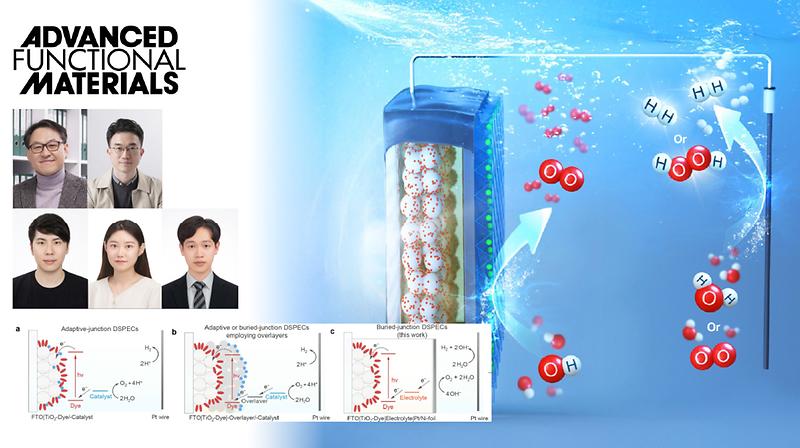
New Study Unveils High-Performance Dye-Sensitized Electrode for Artificial Photosynthesis
-
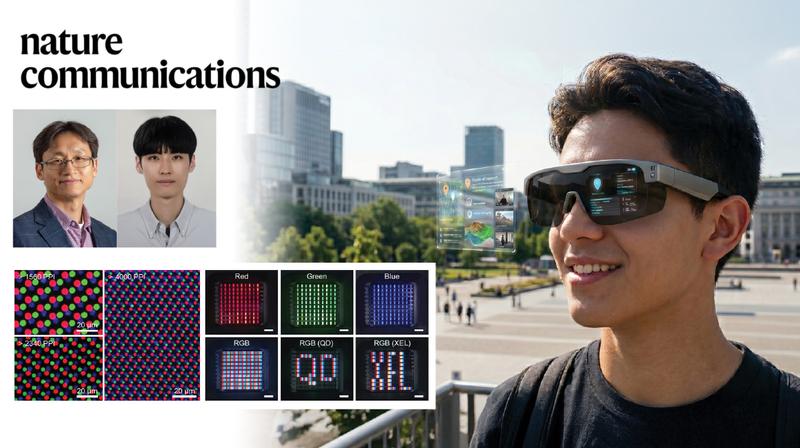
Breakthrough QD Display Technology Achieves 4,000 PPI Resolution — Ideal for XR Glasses
-
Bright Quantum Light Emission Achieved at Room Temperature in 2D Semiconductors