UNIST site map
- Admissions
-
Academics
- Colleges and Schools
-
Academic Affairs
- Academic Calendar
- Academic Curriculum
- Requirements for Graduation
- Browse Open Courses
- Undergraduate Administration
-
Graduate Academic Affairs
- Tuition Fee Payment
- Academic Leave of Absence/ Academic Return
- Voluntary Withdrawal/ Expulsion
- Change of Major
- Change of Degree Program/ Dropping of Degree Program
- Class Period/ Attendance Period/ Academic Year・Semester
- Course Registration
- Course Drop
- Attendance/ Grade/ Exam
- Credit Transfer/ Credit Carryover
- Academic Forms
- Education Support
-
Research/Industry
- Research Aims
- Research Findings
- Researcher Search
-
Research Organizations
- UNIST Multi-Interdisciplinary Institute
- IBS Research Groups
-
UNIST Labs
- Department of Mechanical Engineering
- School of Energy and Chemical Engineering
- Department of Civil
- Department of Materials Science and Engineering
- Department of Nuclear Engineering
- Department of Industrial Engineering
- Department of Design
- Department of Biomedical Engineering
- Department of Biological Sciences
- Department of Electrical Engineering
- Department of Computer Science and Engineering
- Department of Mathematical Sciences
- Department of Chemistry
- Department of Physics
- School of Business Administration
- Graduate School of Carbon Neutrality
- Graduate School of Artificial Intelligence
- Research Support
- University-Industry Relations
- Campus Life
- News Center
- About UNIST
-
etc
- UNIST Bulletin
- Work-Life Balance Support System
- UNIST Gender Equality Plan
- Faculty Invitation for Tenure Track
- Faculty Invitation for Non-Tenure Track
- Board Meeting Minutes
- University Council Meeting Minutes
- Administrative Service Charter
- Privacy Policy
- Copyright Policy
- Rejection of Unauthorized Email Collection
- Operation and Management Policy for Video Information Processing Devices
- Information Disclosure


Connection Points of Knowledge, Everything About UNIST
Try searching.
Recommended search terms


- portal
- U Academics Innovation Center
- Leadership Center
- Dormitory
- Academic Information Center
- International Students Support
- Browse Open Courses
- Course Registration
- Graduation Requirements for Graduation
- Academic Leave of Absence/ Academic Return
- Military Service
- Certificate Issuance
- Academic Calendar
- Scholarships
- Campus Map
- Campus Life Guidebook
- Health Care Center
- Human Rights Center
- portal
- Job Opening
- Announcement for Bid
- UNIST AI Services
- UNIST Daycare Center
- Sports Center
- UI Downloads
- Announcement
- Recruitment of Professors (Non-tenure)
- Faculty Invitation for Tenure Track
- UNIST Academic Information Center
- Office of Research Facilities and Training
- Office of Research Affairs
- Rule Management System
- Academic Calendar


This is a collection of menus necessary for UNIST students .
students
- portal
- U Academics Innovation Center
- Leadership Center
- Dormitory
- Academic Information Center
- International Students Support
- Browse Open Courses
- Course Registration
- Graduation Requirements for Graduation
- Academic Leave of Absence/ Academic Return
- Military Service
- Certificate Issuance
- Academic Calendar
- Scholarships
- Campus Map
- Campus Life Guidebook
- Health Care Center
- Human Rights Center


This is a collection of menus necessary for prospective UNIST Students .
prospective Students


This is a collection of menus necessary for UNIST Faculty & Staff .
Faculty & Staff
- portal
- Job Opening
- Announcement for Bid
- UNIST AI Services
- UNIST Daycare Center
- Sports Center
- UI Downloads
- Announcement
- Recruitment of Professors (Non-tenure)
- Faculty Invitation for Tenure Track
- UNIST Academic Information Center
- Office of Research Facilities and Training
- Office of Research Affairs
- Rule Management System
- Academic Calendar


NEWS CENTER
Discover not only Research Findings and event news, but also the diverse facets of UNIST presented by reporters and writers.
News Center

UNIST News
Researchers Find New Way to Rebuild Organic Semiconductor Backbones
The study was published online in Angewandte Chemie International Edition on April 16, 2026.
- Research
- JooHyeon Heo
- 2026.05.22
- 148
Abstract
Researchers at UNIST have introduced a new, efficient way to alter the backbone of organic semiconductors, giving researchers finer control over the molecules used in flexible displays, sensors, solar cells, and other electronic devices.
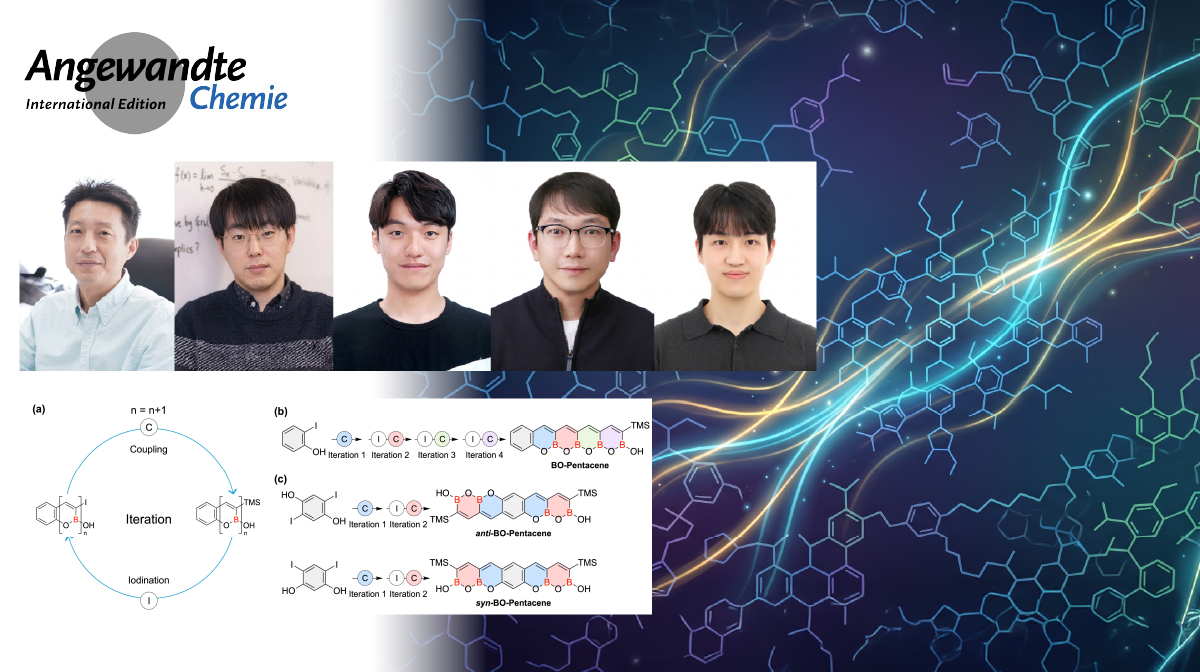
Led by Professors Young S. Park and Seung Kyu Min from the Department of Chemistry, the team created an iterative synthesis method that places boron–oxygen bonds along the edge of pentacene, a well-known organic semiconductor made of five fused benzene rings.
Organic semiconductors are valued because they are light, flexible, and chemically tunable. Small changes in a molecule's length, shape, or atomic makeup can shift how it absorbs light, emits light, or transports charge. But chemists have usually tuned these materials by attaching groups to the outside of the molecule. Changing the carbon framework itself has remained much harder.
The new method works inside that framework. It inserts oxygen and boron atoms into the pentacene backbone, reshaping the molecule rather than simply decorating its edges.
Dr. Sunghwa Jung, the study's first author, said the process relies on a repeated two-step cycle. “Each cycle begins with iodination at a specific site, followed by ring closure using a boron reagent,” he said. “By repeating the sequence, we can build pentacene structures with consecutive boron–oxygen bonds along the molecular edge.”
By carefully controlling these cycles, the team synthesized three different pentacene derivatives, each with distinct boron–oxygen arrangements. The molecules absorbed and emitted light at different wavelengths, showing that their optical properties could be tuned through structure. All three also showed fluorescence quantum yields above 0.70, a sign of efficient light emission. The results point to possible uses in light-emitting organic semiconductors, fluorescent sensors, and optoelectronic materials that require bright, efficient emission.
“This work gives us a stepwise way to build new acene molecules with consecutive boron–oxygen bonds,” Professor Park said. “Because the process can control both molecular length and arrangement, it expands the structures available for organic semiconductor design.”
The study was published online in Angewandte Chemie International Edition on April 16, 2026. It was supported by funding from the National Research Foundation of Korea (NRF) and the Ministry of Trade, Industry and Energy (MOTIE).
Journal Reference
Seonghwa Jeong, Si-In Kim, Jonghwan Lee, et al., “Iterative Synthesis of Pentacene Derivatives with Continuous Boron–Oxygen Bonds,” Angew. Chem. Int. Ed. , (2026).
Related Links


-
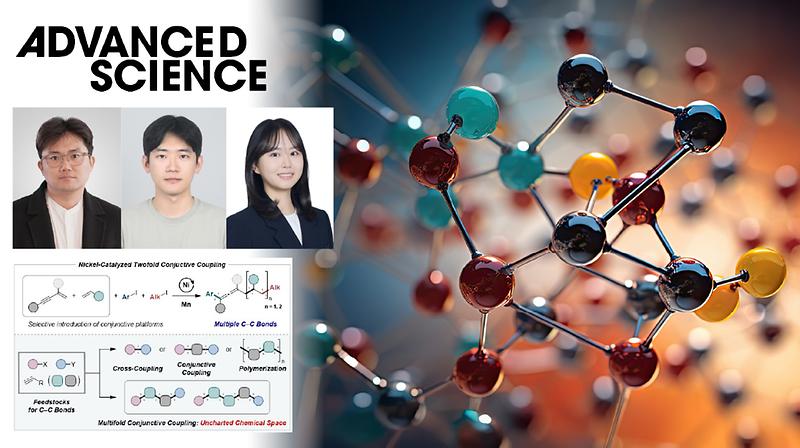
New Radical Relay Strategy Enables One-Step Multi-Component Molecular Assembly
-
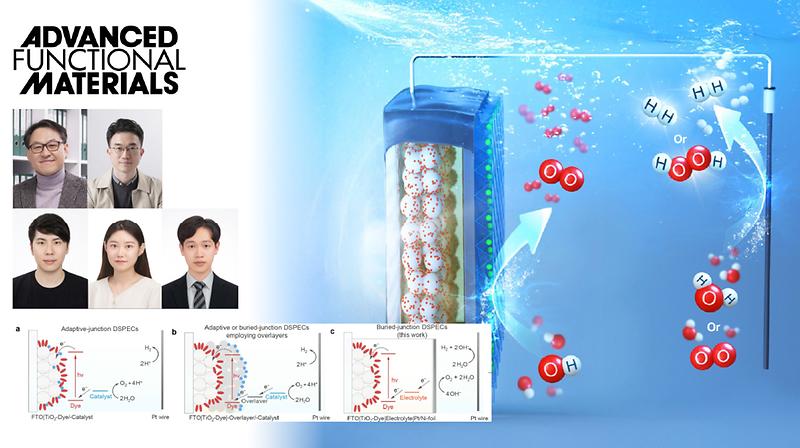
New Study Unveils High-Performance Dye-Sensitized Electrode for Artificial Photosynthesis
-
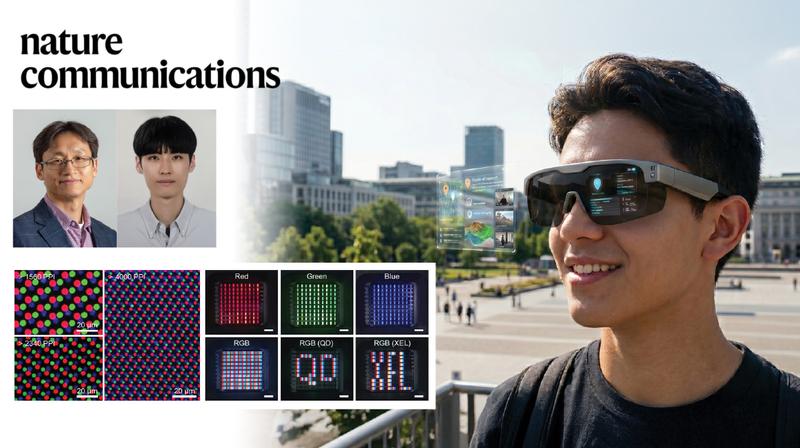
Breakthrough QD Display Technology Achieves 4,000 PPI Resolution — Ideal for XR Glasses
-
Bright Quantum Light Emission Achieved at Room Temperature in 2D Semiconductors